This item is taken from PN Review 288, Volume 52 Number 4, March - April 2026.
News and Notes
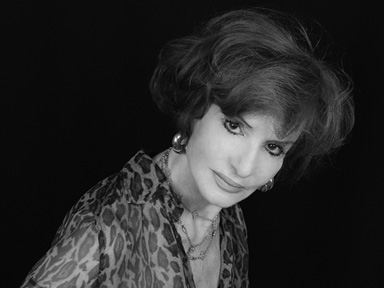
Vénus Khoury-Ghata • Mercure de France, her French Publisher, announced the death on 28 January of the poet and novelist Vénus Khoury-Ghata, a major figure in francophone literature and a key contributor between 2004 and 2017 to PN Review, thanks to Marilyn Hacker’s eloquent translations. An English volume of Hacker’s versions, Alphabets of Sand, was published in 2009 by Carcanet. Khoury-Ghata’s novels included Marina Tsvetaeva, Dying in Elabuga (2019), and several collections of poetry, among them Les Obscurcis (2008), Éloignez-vous de ma fenêtre (2021) and Ceux d’Amazonie (2025). She has been widely translated and was honoured with many awards, including the Grand Prix de poésie of l’Académie française 2009 and the Prix Goncourt de la poésie in 2011.
Jeremy Hooker • PN Review 289 will feature an appreciation of Jeremy Hooker (1941–2025) by Hilary Davies. Between 1978 and 2024 Hooker contributed to PN Review fifty-nine times.
Anatomy of a Cancellation • In December 2025 Elif Shafak replaced Bernadine Evaristo as President of the Royal Society of Literature. After a damaging period in the RSL’s history, Shafak looked forward to ‘building bridges and spreading the love of literature’. It could mark a change. Meanwhile, at the Society of Authors, there is movement also. The author Julia Williams resigned from the SoA board after urging it to take ‘a stronger stand’ (it has taken almost no stand) in supporting authors who face cancellation. Her departure elicited from the SoA a call for ‘more respectful communication’ across the industry. The issue has been brought to a head (again) by disclosures in the BBC podcast series focused on Kate Clanchy, ’Anatomy of a Cancellation’, and Clanchy’s vivid Substack series in which she documents her four years’ experience of cancellation, a subject already commented on in these pages. Williams said she was elected to the board ‘in part, to push back against the intolerance that has swept our industry over the last few years, which has led not only to authors being cancelled (and in some cases losing work) but to a wider culture of fear in publishing, which prevents people speaking out on contentious issues. I had hoped that my presence on the board would mean I would have the opportunity to speak out on these issues and perhaps change hearts and minds.’ Williams is also (as is public knowledge) a member of SEEN in Publishing, ‘a conflict of interest I declared to the chair, chief executive officer and company lawyer in the summer’. With the release of ‘Anatomy of a Cancellation’ she ‘recused myself from the situation’. Sadly, she noted, ‘no statement or apology from the SoA to those affected by cancellation was forthcoming’ after the podcast. ‘I therefore felt I had no option but to resign from the board, as a matter of principle. While I understand that the society is unable to police the opinions of its 12,000 odd members (and nor should it) there is a difference between online spats between authors and the targeting of individuals over differences of opinions that leads to them losing their livelihoods.’ The SoA offers valuable help to its members on contractual and other authorship issues but, ‘Unfortunately the issues around cancellation are not disappearing any time soon. Only recently, The Literary Society has suggested that people boycott the works of Onjali Rauf, Rachel Rooney and J.K. Rowling. This has to stop and the SoA could lead the way. I hope that it can reconsider its position in these matters and do the right thing.’ Anna Ganley, the SoA CEO, declared, ‘We oppose in the strongest terms any attempt to stifle or control the author’s voice whether by censorship, imprisonment, execution, hate speech, harassment, personal attacks or trolling.’ It remains to be seen if the SoA will act in accordance with these principles going forward. It seems doubtful: Ganley added, as a protective codicil to the ‘strongest terms’ she speaks of: ‘SoA policies and communications make it clear that we do not get involved in disputes of opinion between authors. If a member receives unwanted attention on social media, on request, we will provide private support – both emotional and practical. […] We remain dedicated to the right of freedom of speech, including the expression of robust and even unpleasant opinions.’ The Telegraph reported that Helen Field also resigned as an SoA board member.
More Cancellation • In January the Adelaide Festival Writers’ Week was cancelled and the Adelaide Festival Board stepped down in the wake of an author boycott. Dr Randa Abdel-Fattah, the Australian-Palestinian author and academic, had been invited to speak, and then the invitation was withdrawn due to ‘cultural insensitivity concerns’ in the wake of the Bondi beach attack in December. The Festival Director Louise Adler resigned on 12 January: ‘I cannot be party to silencing writers. […] Writers and writing matter, even when they are presenting ideas that discomfort and challenge us. We need writers now more than ever, as our media closes up, as our politicians grow daily more cowed by real power, as Australia grows more unjust and unequal.’
Happy Birthday Giramondo • This year, Giramondo publishing celebrates thirty years. It began with HEAT magazine in 1996, and its commitment to publishing innovative Australian and international writers. Book publishing began in 2002.
The year 2026 is marked by a characteristically ambitious catalogue of new books. It includes a newly discovered collection of haikus by the late Beverley Farmer; two books by Zarah Butcher-McGunnigle (following her cult novella Nostalgia Has Ruined My Life); Yumna Kassab’s Parramatta Dictionary; and a biography of Geoffrey Bardon, the reputed ‘founder’ of the Western Desert Aboriginal art movement, by Kitty Hauser. There is much fiction on offer, and new collections by the poets Lionel Fogarty and Lisa Gorton.
The T.S. Eliot Prize • On 19 January the Canadian poet Karen Solie was awarded the T.S. Eliot Prize for her book Wellwater (Picador), a choice which was expected and welcome. Michael Hofmann was the chair of the judges and spoke persuasively of the shortlist and choice.
Genius steals • Dylan Thomas has been unmasked as a teen-aged plagiarist. Alessandro Gallenzi saved this information for the launch of his Alma Books edition of the Complete Poems of the writer, making of his adolescent thefts a clever selling point for his new book. Young Thomas has long been known to have helped himself to others’ work, but Gallenzi showed the ‘Rimbaud of Cwmdonkin Drive’ to have been quite a bit more felonious than earlier editors admitted. His edition includes a section dedicated to ‘The Plagiarised and Dubious Poems’. From the age of twelve to seventeen he may have laid false claim to as many as thirty poems. The re-revelation was universally reported, but Dylan Thomas has not suffered on the Parnassian bourse as a result.
Manly figures • Fox News commentator David Marcus (4 December) took sudden interest in contemporary poetry. The issue is, of course, that Leftist Elites have corrupted the academy and Leftist Elites run publishing. They’re ‘telling young men literature isn’t masculine’. Young women of course aren’t even another matter. It is worth watching the Fox argument develop.
‘Throughout English-speaking history, up until about 50 years ago, there had always been men famous in their day for writing beautiful poetry, from William Shakespeare, to Lord Byron, to Robert Frost. Yet, sadly today, our society does not see the poet as a manly figure at all.’ Fifty years ago the scene was already under siege from Beats, the New York School and, worst of all, feminists. But let’s not quibble about dates and other facts. This is after all Fox News talking. Marcus charges forward. ‘This erasure of male voices in poetry was not an accident. Like so many of our society’s woes, it was created by a leftist elite in the academy and publishing who thought that women’s voices had been too long ignored, and men’s too widely celebrated. Suddenly, over the past year, we have seen a slew of articles and think pieces asking, what happened to the literary man?
What happened, more or less, was a disastrous decision to tell young men there is nothing masculine about literature, and especially not about poetry. […] The zenith of manly poetry may well have come in World War I, in which endless time in the trenches produced literary gold from Siegfried Sassoon, Joyce Kilmer, Wilfried [sic] Owen and Robert Graves, among hundreds of others.’
He proceeds to quote Robert Graves, without copyright clearance, which is why it is fair to quote his idiocy in this context. ‘Graves had emerged from a tradition of literary men like Rudyard Kipling, whose poems such as “If” and “Gunga Din”, were all but an instruction manual for upright masculine behavior, and are still close to the hearts of many men today.’
He concedes that ‘Very few of us are in a position to test our masculinity against the WWI poets of the trenches’ – at the moment, in any case. But here’s his advice to fathers: ‘You want to raise a good son? Give him Kipling for backbone, Yeats for heart, Eliot for wisdom and Frost for common sense, and he will be fooled by nothing in this world.’ There’s no advice for raising a good daughter, except perhaps to preserve her from the ‘megachurch’ of feminism ‘replacing Faith, Family and Christian Virtue’.
David Marcus is ‘a columnist living in West Virginia and the author of Charade: The COVID Lies That Crushed a Nation’.
Jeremy Hooker • PN Review 289 will feature an appreciation of Jeremy Hooker (1941–2025) by Hilary Davies. Between 1978 and 2024 Hooker contributed to PN Review fifty-nine times.
Anatomy of a Cancellation • In December 2025 Elif Shafak replaced Bernadine Evaristo as President of the Royal Society of Literature. After a damaging period in the RSL’s history, Shafak looked forward to ‘building bridges and spreading the love of literature’. It could mark a change. Meanwhile, at the Society of Authors, there is movement also. The author Julia Williams resigned from the SoA board after urging it to take ‘a stronger stand’ (it has taken almost no stand) in supporting authors who face cancellation. Her departure elicited from the SoA a call for ‘more respectful communication’ across the industry. The issue has been brought to a head (again) by disclosures in the BBC podcast series focused on Kate Clanchy, ’Anatomy of a Cancellation’, and Clanchy’s vivid Substack series in which she documents her four years’ experience of cancellation, a subject already commented on in these pages. Williams said she was elected to the board ‘in part, to push back against the intolerance that has swept our industry over the last few years, which has led not only to authors being cancelled (and in some cases losing work) but to a wider culture of fear in publishing, which prevents people speaking out on contentious issues. I had hoped that my presence on the board would mean I would have the opportunity to speak out on these issues and perhaps change hearts and minds.’ Williams is also (as is public knowledge) a member of SEEN in Publishing, ‘a conflict of interest I declared to the chair, chief executive officer and company lawyer in the summer’. With the release of ‘Anatomy of a Cancellation’ she ‘recused myself from the situation’. Sadly, she noted, ‘no statement or apology from the SoA to those affected by cancellation was forthcoming’ after the podcast. ‘I therefore felt I had no option but to resign from the board, as a matter of principle. While I understand that the society is unable to police the opinions of its 12,000 odd members (and nor should it) there is a difference between online spats between authors and the targeting of individuals over differences of opinions that leads to them losing their livelihoods.’ The SoA offers valuable help to its members on contractual and other authorship issues but, ‘Unfortunately the issues around cancellation are not disappearing any time soon. Only recently, The Literary Society has suggested that people boycott the works of Onjali Rauf, Rachel Rooney and J.K. Rowling. This has to stop and the SoA could lead the way. I hope that it can reconsider its position in these matters and do the right thing.’ Anna Ganley, the SoA CEO, declared, ‘We oppose in the strongest terms any attempt to stifle or control the author’s voice whether by censorship, imprisonment, execution, hate speech, harassment, personal attacks or trolling.’ It remains to be seen if the SoA will act in accordance with these principles going forward. It seems doubtful: Ganley added, as a protective codicil to the ‘strongest terms’ she speaks of: ‘SoA policies and communications make it clear that we do not get involved in disputes of opinion between authors. If a member receives unwanted attention on social media, on request, we will provide private support – both emotional and practical. […] We remain dedicated to the right of freedom of speech, including the expression of robust and even unpleasant opinions.’ The Telegraph reported that Helen Field also resigned as an SoA board member.
More Cancellation • In January the Adelaide Festival Writers’ Week was cancelled and the Adelaide Festival Board stepped down in the wake of an author boycott. Dr Randa Abdel-Fattah, the Australian-Palestinian author and academic, had been invited to speak, and then the invitation was withdrawn due to ‘cultural insensitivity concerns’ in the wake of the Bondi beach attack in December. The Festival Director Louise Adler resigned on 12 January: ‘I cannot be party to silencing writers. […] Writers and writing matter, even when they are presenting ideas that discomfort and challenge us. We need writers now more than ever, as our media closes up, as our politicians grow daily more cowed by real power, as Australia grows more unjust and unequal.’
Happy Birthday Giramondo • This year, Giramondo publishing celebrates thirty years. It began with HEAT magazine in 1996, and its commitment to publishing innovative Australian and international writers. Book publishing began in 2002.
The year 2026 is marked by a characteristically ambitious catalogue of new books. It includes a newly discovered collection of haikus by the late Beverley Farmer; two books by Zarah Butcher-McGunnigle (following her cult novella Nostalgia Has Ruined My Life); Yumna Kassab’s Parramatta Dictionary; and a biography of Geoffrey Bardon, the reputed ‘founder’ of the Western Desert Aboriginal art movement, by Kitty Hauser. There is much fiction on offer, and new collections by the poets Lionel Fogarty and Lisa Gorton.
The T.S. Eliot Prize • On 19 January the Canadian poet Karen Solie was awarded the T.S. Eliot Prize for her book Wellwater (Picador), a choice which was expected and welcome. Michael Hofmann was the chair of the judges and spoke persuasively of the shortlist and choice.
Genius steals • Dylan Thomas has been unmasked as a teen-aged plagiarist. Alessandro Gallenzi saved this information for the launch of his Alma Books edition of the Complete Poems of the writer, making of his adolescent thefts a clever selling point for his new book. Young Thomas has long been known to have helped himself to others’ work, but Gallenzi showed the ‘Rimbaud of Cwmdonkin Drive’ to have been quite a bit more felonious than earlier editors admitted. His edition includes a section dedicated to ‘The Plagiarised and Dubious Poems’. From the age of twelve to seventeen he may have laid false claim to as many as thirty poems. The re-revelation was universally reported, but Dylan Thomas has not suffered on the Parnassian bourse as a result.
Manly figures • Fox News commentator David Marcus (4 December) took sudden interest in contemporary poetry. The issue is, of course, that Leftist Elites have corrupted the academy and Leftist Elites run publishing. They’re ‘telling young men literature isn’t masculine’. Young women of course aren’t even another matter. It is worth watching the Fox argument develop.
‘Throughout English-speaking history, up until about 50 years ago, there had always been men famous in their day for writing beautiful poetry, from William Shakespeare, to Lord Byron, to Robert Frost. Yet, sadly today, our society does not see the poet as a manly figure at all.’ Fifty years ago the scene was already under siege from Beats, the New York School and, worst of all, feminists. But let’s not quibble about dates and other facts. This is after all Fox News talking. Marcus charges forward. ‘This erasure of male voices in poetry was not an accident. Like so many of our society’s woes, it was created by a leftist elite in the academy and publishing who thought that women’s voices had been too long ignored, and men’s too widely celebrated. Suddenly, over the past year, we have seen a slew of articles and think pieces asking, what happened to the literary man?
What happened, more or less, was a disastrous decision to tell young men there is nothing masculine about literature, and especially not about poetry. […] The zenith of manly poetry may well have come in World War I, in which endless time in the trenches produced literary gold from Siegfried Sassoon, Joyce Kilmer, Wilfried [sic] Owen and Robert Graves, among hundreds of others.’
He proceeds to quote Robert Graves, without copyright clearance, which is why it is fair to quote his idiocy in this context. ‘Graves had emerged from a tradition of literary men like Rudyard Kipling, whose poems such as “If” and “Gunga Din”, were all but an instruction manual for upright masculine behavior, and are still close to the hearts of many men today.’
He concedes that ‘Very few of us are in a position to test our masculinity against the WWI poets of the trenches’ – at the moment, in any case. But here’s his advice to fathers: ‘You want to raise a good son? Give him Kipling for backbone, Yeats for heart, Eliot for wisdom and Frost for common sense, and he will be fooled by nothing in this world.’ There’s no advice for raising a good daughter, except perhaps to preserve her from the ‘megachurch’ of feminism ‘replacing Faith, Family and Christian Virtue’.
David Marcus is ‘a columnist living in West Virginia and the author of Charade: The COVID Lies That Crushed a Nation’.
This item is taken from PN Review 288, Volume 52 Number 4, March - April 2026.