
This item is taken from PN Review 288, Volume 52 Number 4, March - April 2026.
Editorial
Peter Jones is an unacknowledged presence in many poetry-lovers’ libraries. He edited the Penguin (Modern Classic since 2001) Imagist Poetry, first published in 1972 and now in its thirteenth or fourteenth edition. It also exists in Chinese translation.
On 7 November 2025 Peter died in a nursing home. He was ninety-six years old. This editorial remembers him and his key role in PN Review and Carcanet Press, both of which he was instrumental in founding. Both continue a frugal path established when, at Pin Farm, South Hinksey, Oxford, we set the wheels in motion, with no sense of where the adventure might lead.
Peter shared ‘the labour and the risks’, as Mark Fisher wrote in Letters to an Editor (1989). Risks included surrendering his teacher’s pension to help finance the risky ‘business’. Robyn Marsack summarised his contribution to the magazine and press in her anthology Fifty/Fifty:
I described our relationship in Fifty/Fifty:
Peter had been a well-loved English teacher at Christ’s Hospital School, known for his theatre productions. He produced and directed Androcles and the Lion, Murder in the Cathedral and The Merchant of Venice. Roger Allam began his acting career under Peter’s aegis. John Pine wrote to me some years ago, ‘Peter Austin Jones was not only my favourite teacher since very early days, but also started my acting career by casting me as Androcles and Shylock when nobody else thought I could do it’. In 1966 Peter produced Richard III, which I remember: I played a very minor part. As an exchange student I first met Peter as house master in Thornton B, where I was billeted.
He came from a background unfamiliar to me. Born in 1929, he was raised in Walsall, Staffordshire. He remembered watching from his bedroom window the glow from the bombing of Coventry in 1940. After two years’ National Service in the RAF (1947–9) he went up to University.
He arrived as an undergraduate at Keble College, Oxford, on a ‘town scholarship’, one of the first awarded. At Keble he met Geoffrey Hill, who had received Bromsgrove School’s foundation scholarship. Peter’s father was a colliery accountant, Hill’s a local policeman. Neither of them ever quite shed a sense of not belonging at Oxford. Their friendship, Peter’s widow Alison Elizabeth Lister says, ‘grew out of that shared displacement and lasted a lifetime’.
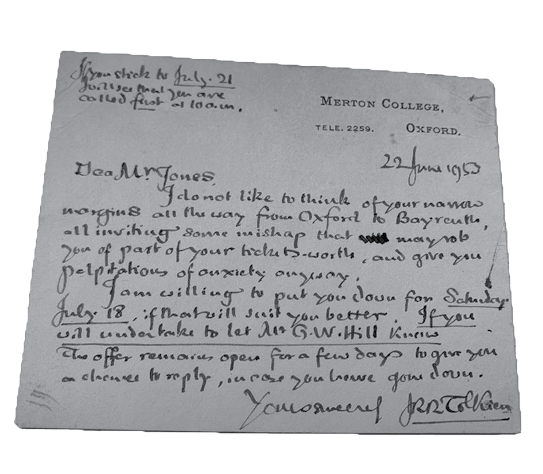
They had Monday tutorials from C.S. Lewis and fortnightly Thursday tutorials from J.R.R. Tolkien. Alison comments, ‘Peter spent most Mondays in Narnia and every other Thursday in Middle Earth’.
In May 2011 Peter wrote to me, ‘I recently spent some time with Geoffrey Hill’. They had been sporadically in touch after Keble but this re-meeting revived their friendship. ‘What an astonishing and quite alarming person to be with for any length of time. […] He is totally possessed by death. He knows, he says, he is going to die when he is 82. He mentioned me in a brief lecture he gave at Keble shortly after his appointment as Poetry Professor, and before he had re-met me. I was taken aback, as you can imagine. He was also utterly charming and has sent me “stuff” with notes of affection, all of which has moved me.’ When they were at Keble they had been nick-named ‘Tweedledum’ and ‘Tweedledee’ – hard to credit given Hill’s formidable future. After 2011, their friendship rekindled – ‘During our marriage,’ Alison recalls, ‘their weekly telephone calls were sacrosanct and could last for hours’ – until Hill’s death in 2016 (he outlived his predicted demise by two years).
Peter’s main editorial contribution to PN Review and Carcanet was in the area of American poetry. He developed an enthusiasm for HD, introduced Tribute to Freud (1971) and brought on board Trilogy, Hermetic Definition (our favourite rediscovery) and the Collected Poems. His Introduction to Fifty American Poets (1980) led to our publication of many of the American writers on our list and several key PN Review contributors. Our last editorial collaboration was in 1980, the critical anthology British Poetry since 1970.
I am grateful to Peter’s widow Alison for evoking his early years and the years after he left Carcanet in 1984. They married in 1984, and their severely disabled son Laurence was born in 1985. In 1991, they left the Manchester area for Elston, Nottinghamshire. She told me that Peter received a second first-class degree at the age of seventy-four from Nottingham, trying ‘to stave off boredom’. Alison at the beginning of their relationship was astonished at how often they would attend theatrical and musical events – his passion for music (I remember especially his love of Wagner and Mahler) is felt throughout his own poetry, not least in his ambitious sequence Seagarden for Julius, dedicated to the memory of the pianist Julius Katchen, who died of cancer in 1969. His passion for Shakespeare was continuous. Around this constant he kept reawakening earlier passions, for Dostoyevsky, for Thomas Mann, for Beckett and others. As far as I am aware, after the publication of The Garden End, a kind of collected poems, in 1977, no further poetry was composed, and in his later letters he mentions among poets only Shakespeare. The Garden End includes the best work from his three earlier collections – Rain (1969), Seagarden for Julius (1970) and The Peace and the Hook – as well as later poems, and an afterword that illuminates how fruitful the misreadings of reviewers, who stigmatised him as an Imagist because of his anthology, can be.
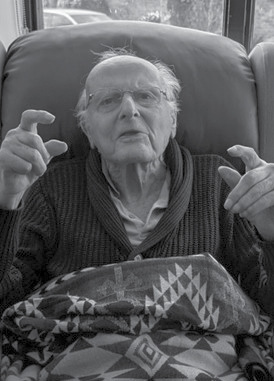
Until it became impossible for him, Alison says, Peter lived at his last home in Cropwell Butler ‘very independently. He managed amazingly well, until professionals “helped” him.’ Alison kindly provided and authorised the publication of the Tolkien message and the final photograph of Peter, taken by Jamie, a carer at The Byars in Caythorpe, Nottinghamshire, still fluently expostulating at ninety-six as he had back in the mid-1960s when I first met him. Though his pianist’s fingers are now bent with arthritis, there is the same intensity and light in his eyes.
On 7 November 2025 Peter died in a nursing home. He was ninety-six years old. This editorial remembers him and his key role in PN Review and Carcanet Press, both of which he was instrumental in founding. Both continue a frugal path established when, at Pin Farm, South Hinksey, Oxford, we set the wheels in motion, with no sense of where the adventure might lead.
Peter shared ‘the labour and the risks’, as Mark Fisher wrote in Letters to an Editor (1989). Risks included surrendering his teacher’s pension to help finance the risky ‘business’. Robyn Marsack summarised his contribution to the magazine and press in her anthology Fifty/Fifty:
After 1972, Jones and Schmidt themselves typeset the majority of Carcanet’s books and PN Review for the first ten years or so of the press’s existence. […] The Peace and the Hook, published by Carcanet in 1972, was Jones’s third collection of poetry. The same year saw his anthology Imagist Poetry published by Penguin […] Writing to MNS [Michael Norton Schmidt] on 30 March, Donald Davie commends the collection and also remarks on ‘an inexcusably brutal review [of Imagist Poetry] in the TLS, which seems to have recruited lately an extremely intransigent and vicious anti-Poundian – I suspect a very senior Gravesian, if not indeed Robert Graves himself’.
I described our relationship in Fifty/Fifty:
Peter Jones, my closest friend and collaborator in establishing Carcanet, was passionate about Pound and was soon editing the Penguin Book of Imagist Verse. He was also writing Fifty American Poets and we read together, puzzling over some of those writers who would not fit the Procrustean bed of Understanding Poetry and who seemed especially difficult in an English context. Peter gave me the first Collected Poems of Elizabeth Jennings in 1967.
Peter had been a well-loved English teacher at Christ’s Hospital School, known for his theatre productions. He produced and directed Androcles and the Lion, Murder in the Cathedral and The Merchant of Venice. Roger Allam began his acting career under Peter’s aegis. John Pine wrote to me some years ago, ‘Peter Austin Jones was not only my favourite teacher since very early days, but also started my acting career by casting me as Androcles and Shylock when nobody else thought I could do it’. In 1966 Peter produced Richard III, which I remember: I played a very minor part. As an exchange student I first met Peter as house master in Thornton B, where I was billeted.
He came from a background unfamiliar to me. Born in 1929, he was raised in Walsall, Staffordshire. He remembered watching from his bedroom window the glow from the bombing of Coventry in 1940. After two years’ National Service in the RAF (1947–9) he went up to University.
He arrived as an undergraduate at Keble College, Oxford, on a ‘town scholarship’, one of the first awarded. At Keble he met Geoffrey Hill, who had received Bromsgrove School’s foundation scholarship. Peter’s father was a colliery accountant, Hill’s a local policeman. Neither of them ever quite shed a sense of not belonging at Oxford. Their friendship, Peter’s widow Alison Elizabeth Lister says, ‘grew out of that shared displacement and lasted a lifetime’.
They had Monday tutorials from C.S. Lewis and fortnightly Thursday tutorials from J.R.R. Tolkien. Alison comments, ‘Peter spent most Mondays in Narnia and every other Thursday in Middle Earth’.
In May 2011 Peter wrote to me, ‘I recently spent some time with Geoffrey Hill’. They had been sporadically in touch after Keble but this re-meeting revived their friendship. ‘What an astonishing and quite alarming person to be with for any length of time. […] He is totally possessed by death. He knows, he says, he is going to die when he is 82. He mentioned me in a brief lecture he gave at Keble shortly after his appointment as Poetry Professor, and before he had re-met me. I was taken aback, as you can imagine. He was also utterly charming and has sent me “stuff” with notes of affection, all of which has moved me.’ When they were at Keble they had been nick-named ‘Tweedledum’ and ‘Tweedledee’ – hard to credit given Hill’s formidable future. After 2011, their friendship rekindled – ‘During our marriage,’ Alison recalls, ‘their weekly telephone calls were sacrosanct and could last for hours’ – until Hill’s death in 2016 (he outlived his predicted demise by two years).
Peter’s main editorial contribution to PN Review and Carcanet was in the area of American poetry. He developed an enthusiasm for HD, introduced Tribute to Freud (1971) and brought on board Trilogy, Hermetic Definition (our favourite rediscovery) and the Collected Poems. His Introduction to Fifty American Poets (1980) led to our publication of many of the American writers on our list and several key PN Review contributors. Our last editorial collaboration was in 1980, the critical anthology British Poetry since 1970.
I am grateful to Peter’s widow Alison for evoking his early years and the years after he left Carcanet in 1984. They married in 1984, and their severely disabled son Laurence was born in 1985. In 1991, they left the Manchester area for Elston, Nottinghamshire. She told me that Peter received a second first-class degree at the age of seventy-four from Nottingham, trying ‘to stave off boredom’. Alison at the beginning of their relationship was astonished at how often they would attend theatrical and musical events – his passion for music (I remember especially his love of Wagner and Mahler) is felt throughout his own poetry, not least in his ambitious sequence Seagarden for Julius, dedicated to the memory of the pianist Julius Katchen, who died of cancer in 1969. His passion for Shakespeare was continuous. Around this constant he kept reawakening earlier passions, for Dostoyevsky, for Thomas Mann, for Beckett and others. As far as I am aware, after the publication of The Garden End, a kind of collected poems, in 1977, no further poetry was composed, and in his later letters he mentions among poets only Shakespeare. The Garden End includes the best work from his three earlier collections – Rain (1969), Seagarden for Julius (1970) and The Peace and the Hook – as well as later poems, and an afterword that illuminates how fruitful the misreadings of reviewers, who stigmatised him as an Imagist because of his anthology, can be.
Until it became impossible for him, Alison says, Peter lived at his last home in Cropwell Butler ‘very independently. He managed amazingly well, until professionals “helped” him.’ Alison kindly provided and authorised the publication of the Tolkien message and the final photograph of Peter, taken by Jamie, a carer at The Byars in Caythorpe, Nottinghamshire, still fluently expostulating at ninety-six as he had back in the mid-1960s when I first met him. Though his pianist’s fingers are now bent with arthritis, there is the same intensity and light in his eyes.
This item is taken from PN Review 288, Volume 52 Number 4, March - April 2026.